Here's the odd thing about laundry room smell: the clothes come out clean, the room gets wiped down, and it still smells stale when you walk in. That's because the room usually isn't the problem. The washing machine is, and the smell it makes has a way of settling into a small closed space and staying there.
The good news is that once you know where washer odor actually lives, fixing it takes about twenty minutes plus a cleaning cycle.
Where the smell actually comes from
A washer handles detergent, body soil, fabric fibers, pet hair, and a lot of warm water. Most of that rinses away. Some of it doesn't. What stays behind collects in the places you never look: the fold of the door gasket, the back of the detergent drawer, the outer tub behind the drum, and the drain area at the bottom of the machine.
Add moisture and a closed door, and that residue becomes a food source. The result is the musty, damp-towel smell people describe, and it gets stronger the longer the machine sits wet between loads.
Front-load machines get it worse than top-loaders. The rubber gasket that seals the door holds a ring of water after every cycle, and if the door gets closed right away, that water has nowhere to go.

Why detergent makes it worse, not better
It feels logical that more detergent means cleaner laundry and a cleaner machine. It works the other way. Extra detergent doesn't fully rinse out, and the leftover film coats the drum and tub. That film is sticky. It grabs lint, body soil, and pet hair, and it holds moisture against the metal and rubber.
High-efficiency machines are especially sensitive to this because they use so little water. If your laundry room smells and you've been generous with the detergent cap, the fix starts with using less, usually about half of what the cap markings suggest for a normal load.
Clean the machine, step by step
This is the part that actually removes the smell rather than covering it.
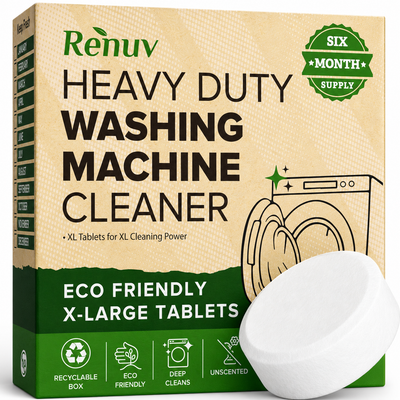
- Run an empty cleaning cycle with a washing machine cleaner tablet. Use the hottest cycle your machine offers, or the dedicated tub-clean cycle if it has one. The cleaner circulates through the drum, the outer tub, and the drain path where the residue lives.
- While that runs, pull out the detergent drawer if it's removable. Rinse it in the sink and get into the compartment it slides into. Detergent film and mold spots love that cavity.
- When the cycle finishes, wipe the door gasket. Pull the fold back and run a cloth around the full circle. You may find water, lint, coins, and the occasional sock. This is often where most of the smell was hiding.
- Wipe the door glass and leave the door open so everything dries.
If the machine has been smelly for months, run a second cleaning cycle. Heavy residue rarely clears in one pass. Our guide on why a washing machine still smells after cleaning covers what to check when one cycle doesn't do it.
Check the rest of the room
Once the washer is clean, give the room itself a quick pass, because a few other things can hold odor:
- The drain. Washer drains have a water trap, and if it dries out or gets coated in detergent scum, it vents smell into the room. Pouring a pitcher of clean water down a floor drain refills the trap.
- The hamper. A pile of damp towels generates the same smell as a dirty washer.
- The forgotten load. A wet load left in the drum overnight can leave odor in the machine that takes a cleaning cycle to remove, so set a timer if you're prone to forgetting.
- Airflow. Laundry rooms are usually small and often windowless. A door left open or a small fan makes a real difference.
Habits that keep it fresh
The maintenance side is simple. Use the right amount of detergent. Move wet loads to the dryer promptly. Leave the washer door and detergent drawer cracked open between uses so the machine dries out. Wipe the gasket when you see water pooled in it.
Then run a cleaning cycle monthly. If you have pets, lean toward every three weeks, since hair and dander build up faster. The monthly cycle is what keeps the residue from ever getting established, and it's a lot easier than digging out a year of buildup later.
One thing that doesn't work: fragrance. Plug-in air fresheners and scented boosters layer perfume on top of the musty smell without touching the source. If the room needs perfume to smell acceptable, the washer is telling you something.
Frequently asked questions
Why does my laundry room smell even though I clean it?
The smell is usually coming from inside the washer, not the room. Detergent film, lint, and moisture collect in the gasket, drawer, and drain area, and no amount of cleaning the room fixes that. Clean the machine itself.
How often should I clean my washing machine?
Monthly for most households, every three weeks or so if you have pets or wash a lot of activewear. Wipe the gasket and leave the door open between loads regardless.
Do front-load washers smell more than top-loaders?
They tend to, because the door gasket traps water and the sealed door blocks airflow. Wiping the gasket and leaving the door open after each load closes most of the gap.
Will a smelly washer make my clothes smell?
Yes, eventually. Towels usually show it first because they hold moisture. If clean laundry smells musty straight out of the machine, the washer is overdue for a cleaning cycle.
Related reading
- How to remove washing machine odor
- Why your washing machine still smells after cleaning
- How to clean a front load washing machine
- Washing machine tub cleaner: how to remove hidden buildup
Shop Renuv Washing Machine Cleaner
Browse the full range: washing machine cleaners and all appliance cleaners.