You've taken out the trash, run the vacuum, lit the candle, and the house still smells slightly off. If the smell survives regular cleaning, there's a good chance it's coming from a machine, because appliances hold warm water and residue in places no ordinary cleaning ever reaches. The trick is figuring out which one.
Here's how to trace a mystery smell to its source, room by room, and what to do once you find it.
Start with the character of the smell
Different buildup smells different, and the smell itself narrows the search fast. A sour, rotting note points to food residue, which means the kitchen: disposal or dishwasher. A musty, damp-towel note points to detergent film and trapped moisture, which means the laundry room. A faintly stale, almost mildewy note near the coffee station points to the machine's reservoir and drip tray.
Walk the house once and note where the smell is strongest. Then run the checks below in that room.

Kitchen: check the disposal first
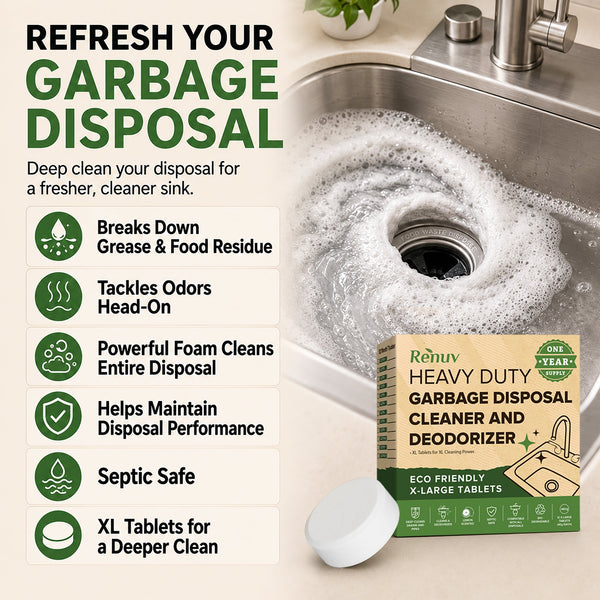
The garbage disposal is the most common kitchen culprit, and the check is simple: lean over the sink and smell the drain. Food residue coats the grinding chamber and, worse, the underside of the rubber splash guard, a surface almost nobody has ever looked at. Lift the edge of the guard with a fingertip and you'll usually find the source in the form of a slick gray film.
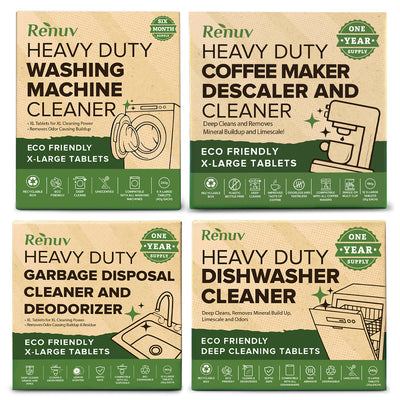
The fix is a foaming disposal cleaner, which scrubs the chamber and guard as it works, followed by a habit of running cold water for a few seconds after each use. The full walkthrough is in why your garbage disposal smells and how to fix it.
Kitchen: then the dishwasher
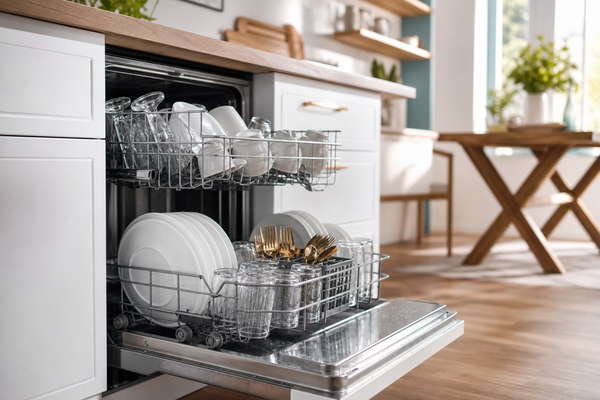
If the drain smells fine, open the dishwasher and smell inside. A sour note when the door opens almost always means the filter, the twist-out cylinder in the tub floor that catches food debris. Rinse it under hot water, check the drain area around it, and run a dishwasher cleaner cycle to clear the grease and film from the rest of the machine.
Cloudy glassware alongside the smell is a bonus clue that mineral buildup is involved; we cover that pairing in cloudy glassware and dishwasher odor.
Laundry room: the washer, two ways
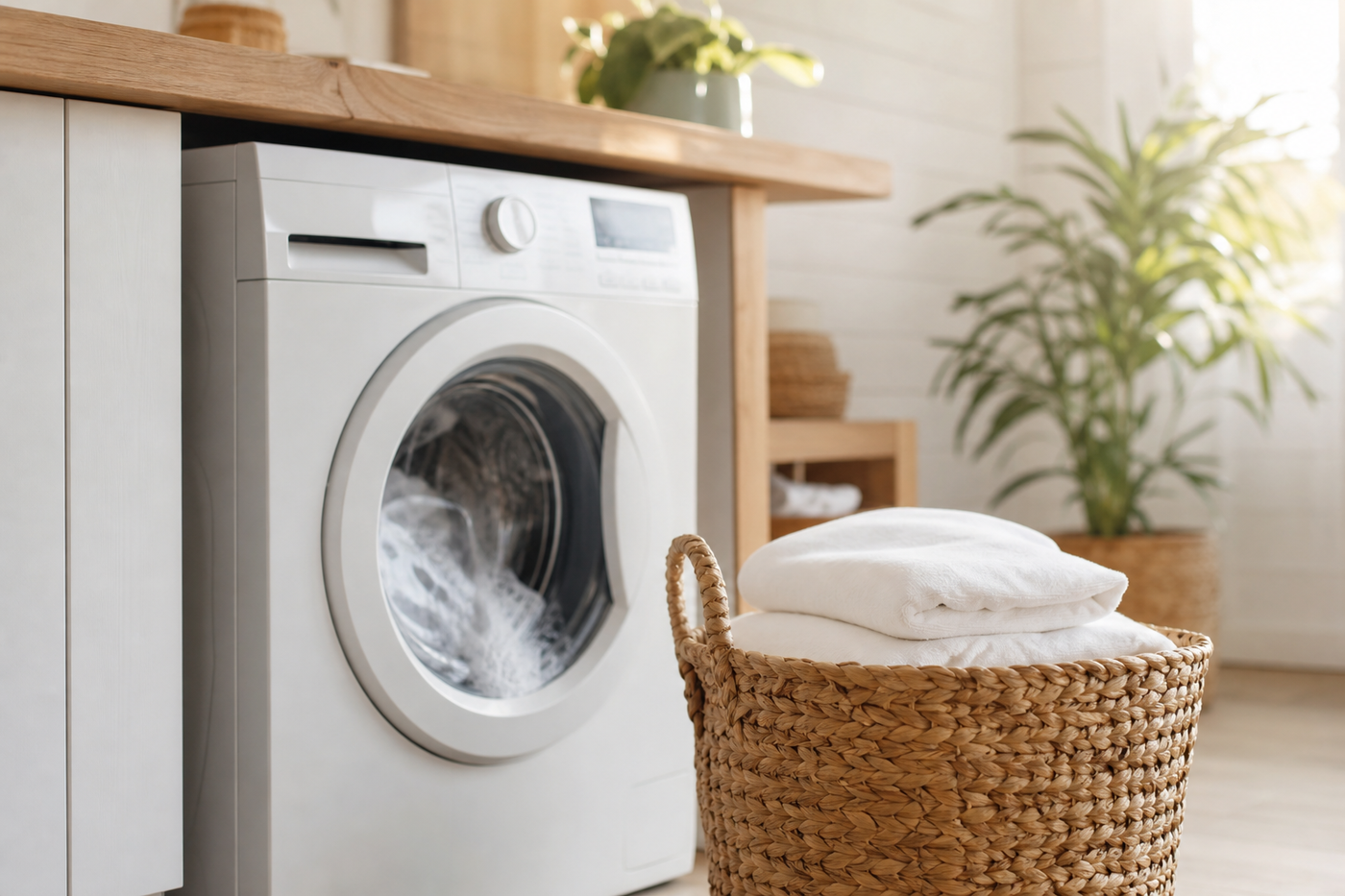
The musty smell in a laundry room is nearly always the washer, and it hides in two spots. First, the door gasket on front-load machines: pull back the rubber fold and smell it. Standing water, lint, and residue collect in that ring. Second, the drum and outer tub, where detergent film builds up out of sight. If clean towels come out smelling damp, this is confirmed.
Run an empty hot cycle with a washing machine cleaner, wipe the gasket, rinse the detergent drawer, and start leaving the door open between loads. If the smell persists in the room after the machine is clean, check the floor drain, whose water trap can dry out and vent sewer smell; a pitcher of water refills it. The room-level version of this hunt is in why laundry rooms start to smell.
The coffee corner
Coffee makers earn their smell honestly: old coffee oils go rancid in the carafe and brew basket, water sits stale in the reservoir, and the drip tray under a pod machine collects a surprising amount of sludge. Smell the reservoir with the lid open. If it's stale, empty it, wash the removable parts, and run a cleaner and descaler cycle through the brew path, then rinse with fresh water.
When it's none of the machines
Three non-appliance sources are worth ruling out before you tear the kitchen apart. A dried-out P-trap under a rarely used sink vents sewer gas; run the tap for thirty seconds. The refrigerator drip pan, hidden underneath the fridge, holds evaporating water that can turn. And the space under trash and recycling bins collects drips that outlive the bag. If the smell survives every appliance check, those three are next.
Fix it once, then keep it fixed
Whichever machine turns out to be the source, the durable fix is the same shape: clean it with the cleaner made for it, then put it on a schedule so the smell doesn't rebuild. Disposals want attention every week or two, washers and dishwashers monthly, coffee makers monthly in hard-water homes. Stack them on one day and the whole rotation is a fifteen-minute job; the sequence is in the monthly appliance cleaning checklist.
Frequently asked questions
Why does my house smell even after I clean?
Because regular cleaning doesn't reach inside appliances. Washers, dishwashers, disposals, and coffee makers hold water and residue internally, and that's where persistent household smells usually live.
How do I find where a smell is coming from?
Go by character and location. Sour or rotting smells point to the disposal or dishwasher filter. Musty, damp smells point to the washer gasket and drum. Stale smells near the coffee station point to the reservoir and brew path. Smell each suspect directly; the source is usually obvious up close.
What's the most common appliance behind household odor?
The garbage disposal in the kitchen and the washing machine in the laundry room. Both hold wet residue in chambers you can't see into, and both respond quickly to a purpose-made cleaner.
Can air fresheners fix appliance smells?
No. They layer fragrance over the odor while the residue keeps building. If a room needs constant freshening, treat that as a sign an appliance needs cleaning.
Related reading
- Why laundry rooms start to smell and how to keep them fresh
- Why your garbage disposal smells and how to fix it
- Cloudy glassware and dishwasher odor: what buildup is telling you
- Why your washing machine still smells after cleaning
Shop the Whole-Home Appliance Cleaner Bundle
Browse the full range: all Renuv appliance cleaners.