Cloudy glasses and a whiff of something off when you open the dishwasher door tend to arrive together, and both get ignored for the same reason: the machine still runs, the dishes still come out. But they're the dishwasher's two clearest ways of telling you buildup has moved in, and each one points to a different kind.
Reading them right saves you from cleaning the wrong thing.
First, figure out which cloudy you have
Cloudy glassware comes in two varieties, and only one of them is fixable.
Hard-water film is a mineral and detergent deposit sitting on the surface of the glass. It's the common one, and it comes off.
Etching is permanent damage to the glass itself, usually from years of soft water combined with too much detergent. Nothing removes it, because there's nothing on the glass; the surface itself is worn.
The test takes thirty seconds: soak one cloudy glass in white vinegar for five minutes. If it comes out clear, you have film, and everything below applies. If it's still cloudy, it's etched, and the fix is using less detergent going forward to protect the rest of your glassware.

What causes the film
Film is a supply-chain problem inside the machine. Hard water carries minerals in, detergent binds with them, and if the machine can't rinse everything away cleanly, the leftovers dry onto the glass. Three things make it worse: mineral buildup coating the inside of the machine, spray arms that can't distribute water evenly because their holes are clogged, and skipping rinse aid, which is what helps water sheet off the glass instead of drying in droplets.
Notice what that means: cloudy glasses usually reflect the state of the dishwasher, not the glasses. Washing them by hand fixes today's glasses and next week's are cloudy again.
What the odor is telling you
Smell points somewhere else. The most common source is the filter, a twist-out cylinder in the floor of most modern dishwashers that catches food debris so it doesn't recirculate. Plenty of owners have never removed theirs. If that's you, that's almost certainly the smell.
After the filter, the suspects are trapped food in the drain area, grease coating the lower door edge where the spray never quite reaches, and stale moisture from a door that stays latched between runs. A sour smell right when you open the door usually means the filter; a mustier smell that builds over days points to moisture and grease. The full odor rundown is in dishwasher cleaner and deodorizer: how to remove odors.
The fix, in order
- Pull the filter. Twist it out of the floor of the tub, rinse it under hot water, and brush off anything stuck in the mesh. Check the sump area around it for debris.
- Check the spray arms. Spin each one by hand and look at the holes. If any are clogged with mineral crust or food bits, clear them with a toothpick so water can move evenly again.
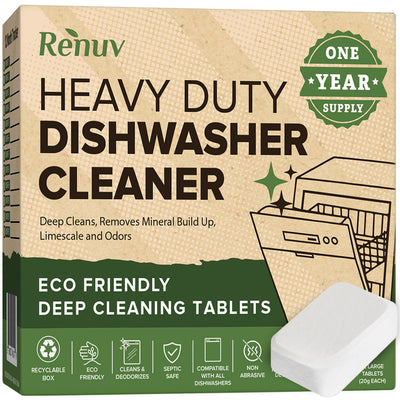
- Run a cleaner cycle. With the machine empty, run a dishwasher cleaner tablet on the hottest cycle. It works on the grease, residue, and mineral film coating the tub, arms, and drain path, the places a sponge can't reach.
- Wipe the door edges and gasket. The lower lip of the door collects a grease line that no cycle touches.
If the machine was heavily built up, the first cleaner cycle may loosen more than it removes. Run a second one. Then rewash a rack of the cloudy glasses; with film, they should come out noticeably clearer.
Keeping both problems from coming back
Fill the rinse aid dispenser and keep it filled. It's the single biggest lever on water spots and film. Load so dishes don't nest or block the spray arms, and skip the temptation to pre-rinse everything to spotless, since detergent needs a little soil to work on. Run hot water at the sink for a few seconds before starting the machine so the first fill is hot rather than lukewarm.
Then put the machine on the same monthly rhythm as the rest of your appliances: a filter rinse every week or two, a cleaner cycle once a month, sooner in hard-water areas. Why dishwashers need this at all is covered in why you need to clean your dishwasher.
Frequently asked questions
Why is my glassware cloudy after the dishwasher?
Usually hard-water film: minerals and detergent residue drying onto the glass because the machine isn't rinsing cleanly. Soak one glass in vinegar for five minutes; if it clears, it's film and a machine cleaning fixes it. If it stays cloudy, the glass is etched, which is permanent.
Why does my dishwasher smell?
Most often a dirty filter. Food debris collects in it within days, and many owners have never rinsed theirs. Trapped food in the drain area, grease on the door edges, and stale moisture are the other usual sources.
Will a dishwasher cleaner fix cloudy glasses?
If the cloudiness is film, yes, over the next few cycles. The cleaner removes the mineral and grease buildup inside the machine that causes poor rinsing. Etched glasses won't recover, but cleaning the machine protects the ones that aren't damaged yet.
How often should I clean the dishwasher filter?
Rinse it every week or two, and run a full cleaner cycle monthly. Hard-water homes should lean toward the shorter end of both.
Related reading
- Why you need to clean your dishwasher
- Dishwasher cleaner and deodorizer: how to remove odors
- How to clean a dishwasher and keep it running better
- The monthly appliance cleaning checklist for a fresher home
Shop Renuv Dishwasher Cleaner & Deodorizer
Browse the full range: dishwasher cleaners and all appliance cleaners.