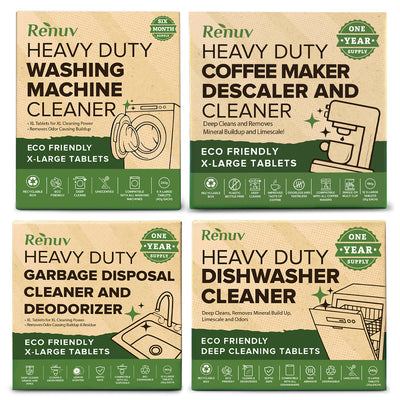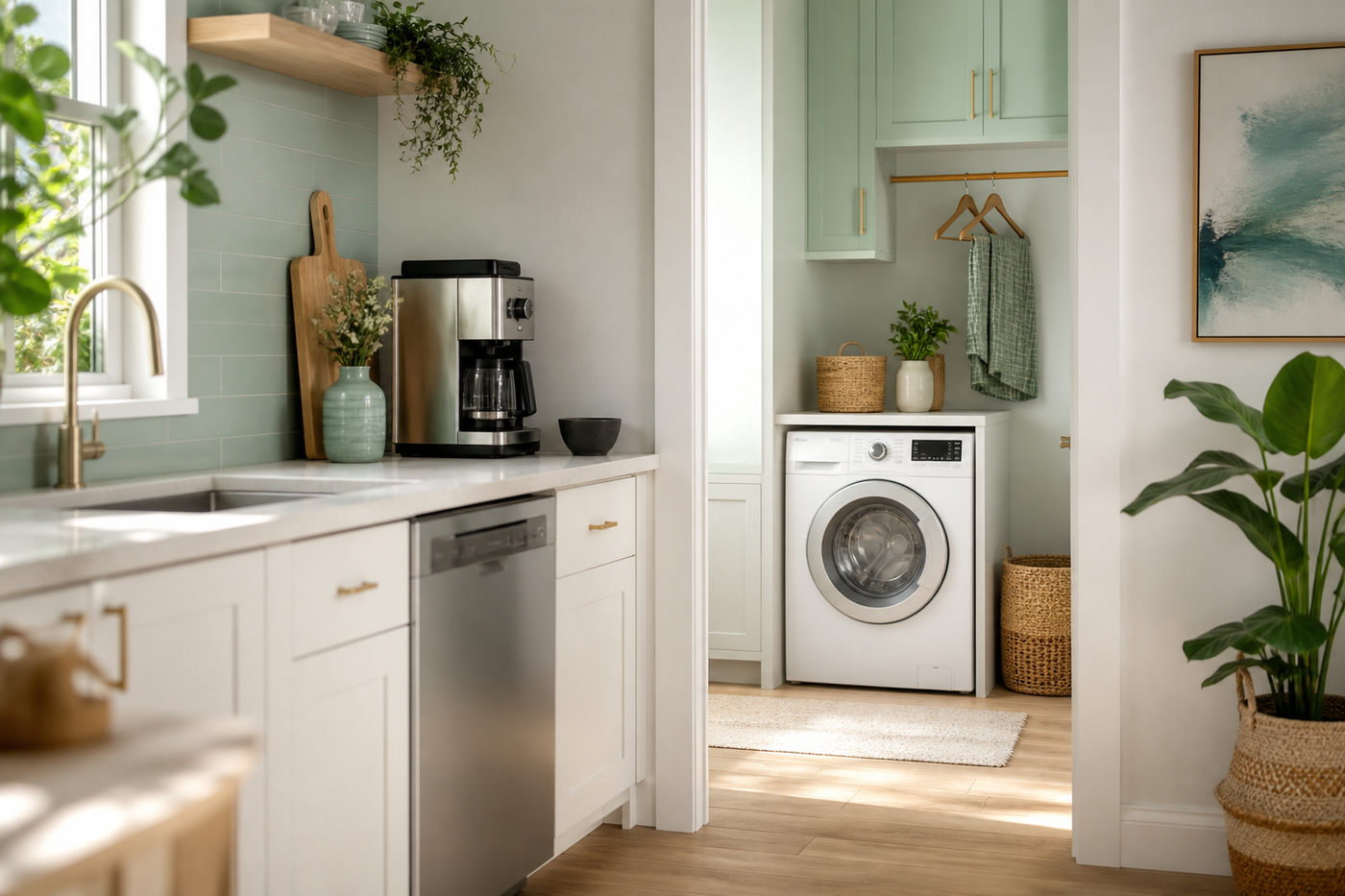
Appliances get forgotten because they don't look dirty. A washer, a dishwasher, a disposal, a coffee maker: none of them show buildup on the outside, so the maintenance quietly slides until something smells or stops working right. A short monthly checklist fixes that. Run through it once a month and the whole house stays fresh, and you avoid the deep-cleaning headaches that come from letting buildup sit for a year.
Washing machine
Detergent, fabric softener, and hard-water minerals leave residue in the drum, the gasket, and the parts you never see. Left alone, that residue starts to smell, and the odor transfers to clothes that come out of a fresh wash. Run an empty hot cycle with a washing machine cleaner tablet, wipe the door gasket, and leave the door open to dry. More detail in how to clean a front load washing machine.

Dishwasher
Grease and food film collect on the filter and spray arms, which is why glasses come out cloudy and the machine sometimes smells when you open it. Run it empty on a hot cycle with a dishwasher cleaner to clear it out. It's the difference between a dishwasher that washes and one that just rinses. See how to remove dishwasher odors.
Garbage disposal
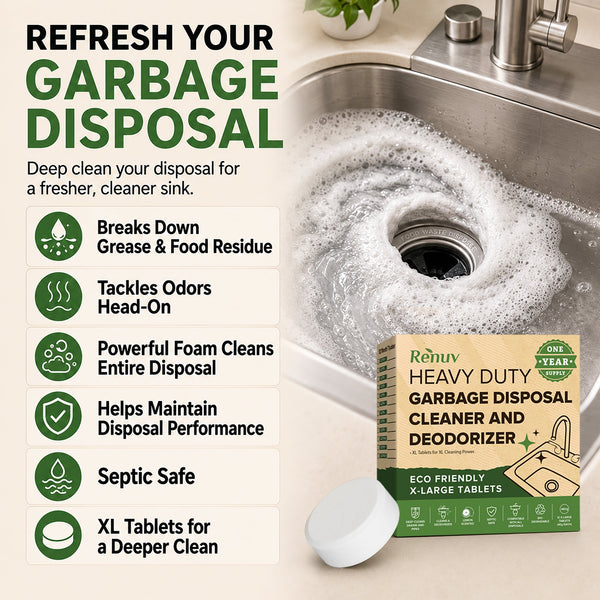
The disposal is the most common source of a sour kitchen smell, because food and grease build up under the splash guard where rinsing never reaches. A foaming disposal cleaner scrubs those hidden surfaces in a couple of minutes. Here's why your disposal smells and how to fix it.
Coffee maker
Hard water leaves scale inside the machine that slows the brew and flattens the flavor. A monthly descale keeps the coffee tasting right and the machine running well. Skip the vinegar, which smells and can wear on internal parts, and use a descaling tablet instead. More in what actually works for cleaning a coffee maker.
Why each one needs its own cleaner
It's tempting to want one bottle for everything, but what collects in a washer isn't the scale in a coffee maker or the grease in a disposal. Each machine holds onto something different, so each cleaner is built for that specific job. Keeping the set on hand is what makes the monthly routine actually happen, because the moment you have to go buy something is the moment it gets skipped.
The one-page version
Once a month: run the washer empty with a cleaner and wipe the gasket, run the dishwasher empty with a cleaner, foam out the disposal, and descale the coffee maker. Twenty minutes of mostly hands-off work, and the house stays fresh instead of slowly turning musty.
Frequently asked questions
How often should I clean my home appliances?
Once a month is the right rhythm for most homes. Hard-water areas and heavy use may call for a little more often, especially for the coffee maker and washing machine.
Do I really need a different cleaner for each appliance?
Yes. The buildup differs by machine, so the formulas do too. A washer cleaner targets detergent and mineral residue, a descaler targets scale, and a disposal cleaner foams to reach hidden grime.
What happens if I skip a month?
Nothing dramatic at first, but buildup compounds. Staying on a monthly schedule is far easier than removing heavy scale or residue that's had months to harden.
What's the fastest order to do everything?
Start the washer and dishwasher cycles first so they run in the background, foam the disposal, then descale the coffee maker while the machines finish.