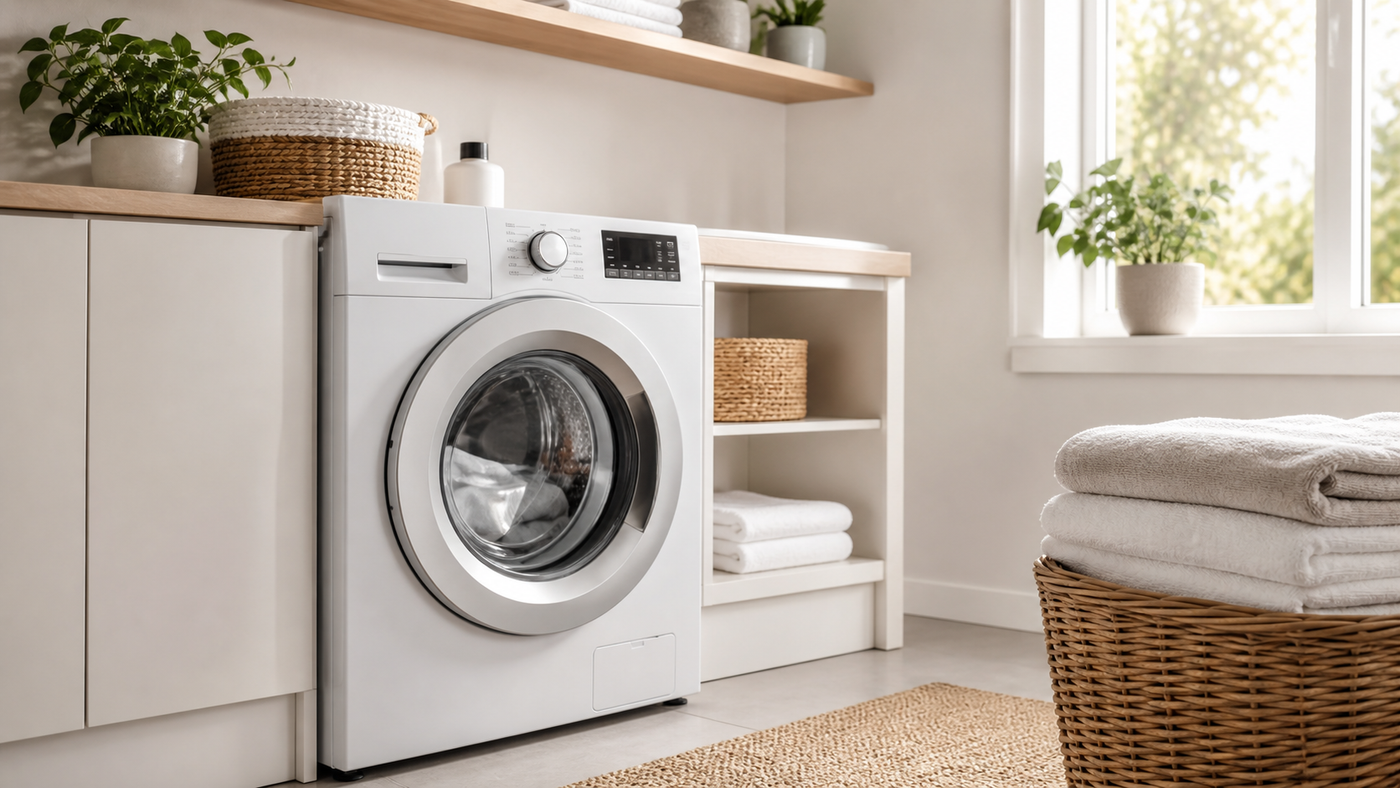
If your washing machine smells musty, sour, moldy, or a little like rotten eggs, the odor is usually coming from buildup inside the machine. Detergent residue, fabric softener, body soil, hard-water minerals, and trapped moisture can collect in the drum, tub, pump, hoses, and internal water lines.
For a broader monthly maintenance walkthrough, see our full guide on how to clean a washing machine and remove odor and buildup.
That buildup does not always look dramatic from the outside. Sometimes the first sign is simple: clean laundry comes out smelling less clean than it should.
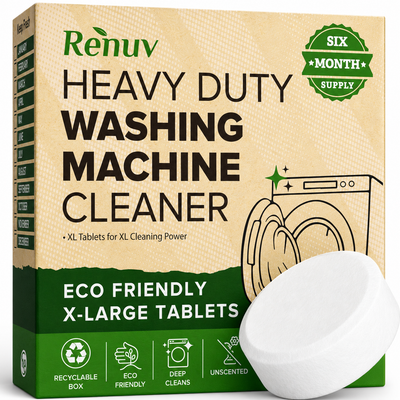
The fix is a deep clean that reaches the parts you cannot scrub by hand. For a simple monthly routine, Renuv Washing Machine Cleaner Tablets are made to help remove odor-causing residue, grime, and buildup in front load, top load, and HE washing machines.
Why washing machines start to smell
A washing machine seems like it should clean itself, but it does not work that way. The machine handles dirty laundry, detergent, sweat, oils, lint, and minerals from your water. Some of that rinses away. Some of it sticks around.
Common causes of washing machine odor include:
- Too much detergent or fabric softener
- Detergent residue inside the drum or drawer
- Hard-water minerals and limescale
- Grime in the pump, hoses, pipes, filter, or hidden parts
- A damp washer that never gets time to dry fully
Front load and top load washers can both develop odor when buildup collects below the water line, around the tub, inside the drum, or through the internal paths water travels during a cycle.
What different washer smells can mean

A musty or mildew smell usually points to trapped moisture and residue. A sour smell often comes from detergent buildup, fabric softener, or laundry soil that never fully rinsed away. A rotten-egg smell can come from bacteria in buildup, stagnant water, or in some cases a drain or plumbing issue.
If the smell is strong, comes from the drain, or returns immediately after cleaning, check the drain hose, standpipe, and filter. But if the odor is mostly inside the washer, a deep cleaning cycle is the right place to start.
How to remove washing machine odor
Use this routine when your washer smells bad, your laundry smells musty, or the machine has not been cleaned in a month or more.
Step 1: Empty the washer
Do not clean the machine with clothes inside. Remove laundry, loose lint, pet hair, and anything sitting in the drum.
Step 2: Clear visible residue before the deep-clean cycle
Wipe away any visible residue in the drum, around the opening, or inside the detergent drawer. This gives the deep-cleaning cycle a cleaner starting point before it works through the internal parts of the washer.
If the detergent drawer is removable, take it out and rinse it with warm water. Use a soft brush or cloth to loosen old detergent and softener buildup.
Step 3: Add a washing machine cleaner tablet

Drop one washing machine cleaner tablet directly into the empty drum. Do not put it in the detergent drawer.
Renuv tablets are designed to dissolve through the cycle and help break down odor-causing residue, grime, mineral buildup, and limescale in the drum, tub, pipes, hoses, pump, and other internal areas regular laundry detergent does not clean well.
Step 4: Run a hot cleaning cycle
If your machine has a clean washer cycle, use it. If it does not, run a normal or heavy cycle with hot water. The goal is to give the cleaner enough time and heat to work through the drum and internal parts.
Step 5: Wipe away loosened residue
When the cycle finishes, wipe the drum and any visible loosened residue. If the machine was very dirty, the cleaning cycle may loosen buildup that was stuck inside the washer.
Step 6: Let the machine dry
Let the washer air out after cleaning so the inside can dry. This small habit helps keep moisture from getting trapped again.
How often should you clean a smelly washer?
For most homes, once a month is a good baseline. If you wash a lot of towels, workout clothes, pet bedding, work uniforms, or heavily soiled laundry, you may need to clean the machine more often.
You should also clean the washer if:
- The drum smells musty after a load
- Your clean laundry smells damp or sour
- You see residue in the drum or detergent drawer
- You use fabric softener often
- You have hard water
You can shop the full Washing Machine Cleaners collection if you want washer-specific options, or browse all appliance cleaners for the rest of the machines in your home.
What not to do when your washer smells bad
Do not just add more detergent. Too much detergent can make the problem worse because extra soap leaves more residue behind.
Do not rely on fragrance beads or scented detergent to cover the smell. A stronger scent might hide the odor for a load or two, but it does not remove the buildup causing it.
Be careful with vinegar and bleach. Vinegar can help with light mineral residue, but it is not the best choice for heavy grime and odor buildup. Bleach may reduce some odor, but it can leave residue behind and does not address every type of buildup inside the machine.
How to keep washing machine odor from coming back

Once the odor is gone, prevention is mostly about keeping residue and moisture under control.
- Use the right amount of detergent for each load
- Skip fabric softener if it leaves buildup in your machine
- Move wet laundry to the dryer quickly
- Let the washer air out after washing
- Clean the detergent drawer regularly
- Run a washer cleaning cycle monthly
A simple monthly cleaning routine is easier than waiting until the machine smells bad again. If odor is already coming from the washer, start with a deep clean. Then repeat monthly to keep residue from building back up.
FAQ
Why does my washing machine smell bad?
Most washing machine odor comes from detergent residue, fabric softener, dirt, hard-water minerals, and trapped moisture. That buildup can collect inside the drum, tub, pipes, pump, filter, hoses, and other internal parts.
Why does my washer smell like rotten eggs?
A rotten-egg smell can come from odor-causing buildup, stagnant water, or bacteria inside the machine. It can also point to a drain or plumbing issue. Clean the washer first, then check the drain hose and filter if the smell comes back quickly.
Can I use vinegar to remove washing machine odor?
Vinegar may help with light mineral residue, but it is not the best all-purpose answer for smelly washer buildup. A dedicated washer cleaner tablet is usually a better fit for grime, detergent residue, and odor-causing buildup inside the machine.
Are washing machine cleaner tablets safe for front load and HE washers?
Renuv Washing Machine Cleaner Tablets are made for front load, top load, and HE washing machines. Always use them in an empty washer and follow the directions on the package.
How often should I use washing machine cleaner tablets?
Use a washer cleaner about once a month or every 30 cycles. Clean more often if your washer gets heavy use, you have hard water, or odors return quickly.
Ready to clean the smell at the source? Try Renuv Washing Machine Cleaner Tablets for a simple monthly washer cleaning routine.