If your Nespresso machine starts brewing slowly, tastes a little off, or shows a descaling alert, mineral buildup is probably part of the problem. A descaling solution is made to break down that hard-water scale inside the water path, where a normal rinse cannot reach.
Descaling is different from washing the drip tray or wiping the outside of the machine. Those jobs handle visible mess. Descaling is for the inside: the reservoir, internal tubing, heating area, and brew path.
Nespresso sells its own descaling kit, and many machine manuals point people back to the brand's specific process. The important part is to follow your machine's manual and run enough clean water afterward. Different Nespresso models use different button sequences and water amounts.

For everyday owners, the signs are simple. Descale when the machine tells you to, when brewing takes longer, when the cup volume seems off, or when the coffee tastes flatter than usual. Hard-water homes usually need descaling more often.
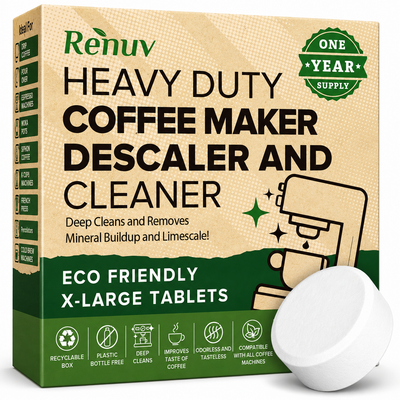
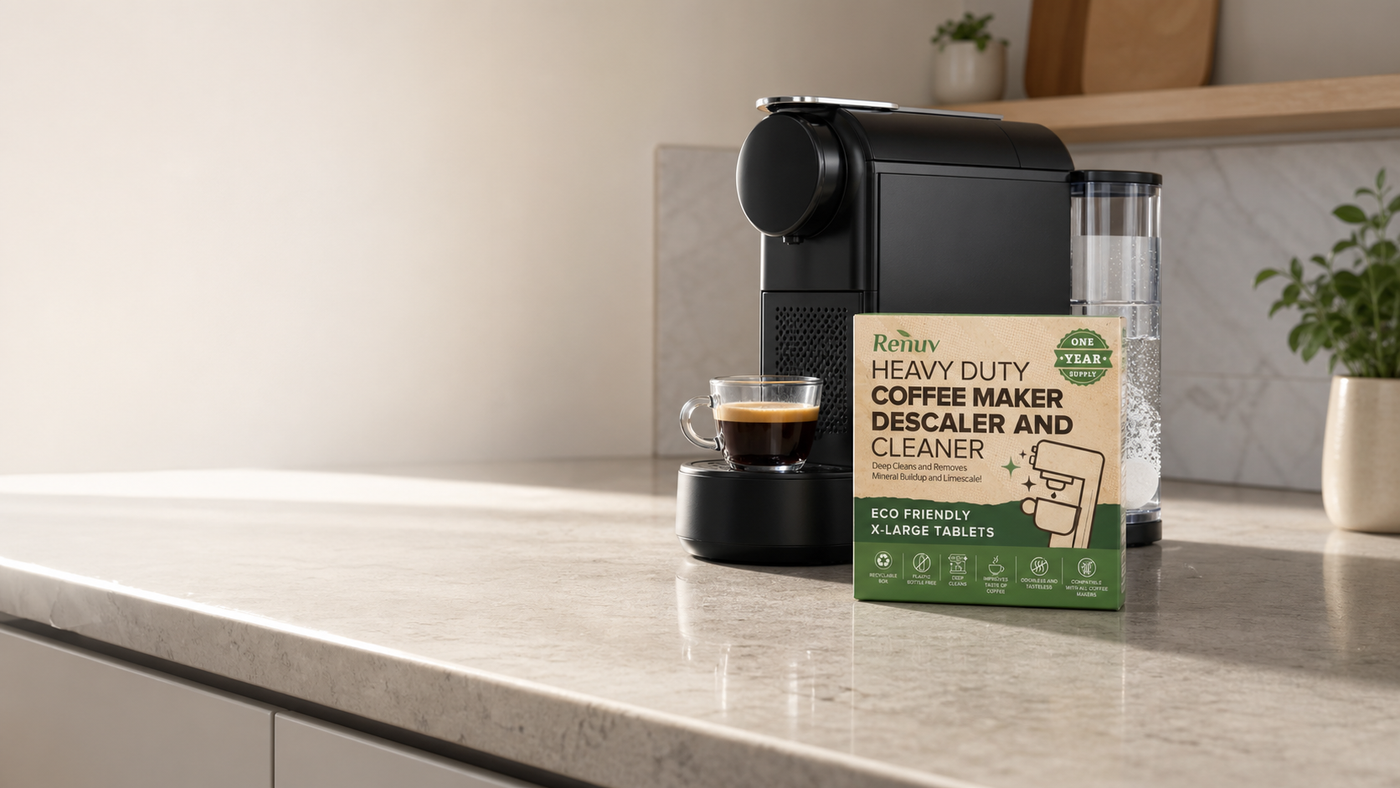
Renuv Coffee Maker Cleaner & Descaler Tablets are useful for routine coffee-machine care because they are pre-measured and easy to store. Add the tablet to water, let it dissolve, run the cleaning or brew cycle without coffee, then rinse the machine with clean water.
If your Nespresso manual requires a specific branded descaler, follow the manual. If you are doing general maintenance and want a simple tablet routine, use a cleaner made for coffee machines and rinse thoroughly.
The main mistake is waiting until the machine struggles. Scale builds slowly, then all at once the coffee tastes weaker, the machine sounds louder, or the alert light appears. A monthly reminder is a good starting point if you brew every day.
For the broader product path, see our coffee maker cleaners and natural descalers, or read why coffee makers need cleaning and descaling.