
How to Clean and Descale a Keurig Coffee Maker
Share
If your Keurig is brewing slower than usual, tasting off, or giving you weak coffee, it probably needs more than a quick rinse. Coffee residue and mineral buildup can collect inside the machine over time, especially if you use it often or have hard water.
The good news is this is fixable. A regular cleaning and descaling routine can help your Keurig brew better, taste better, and last longer.
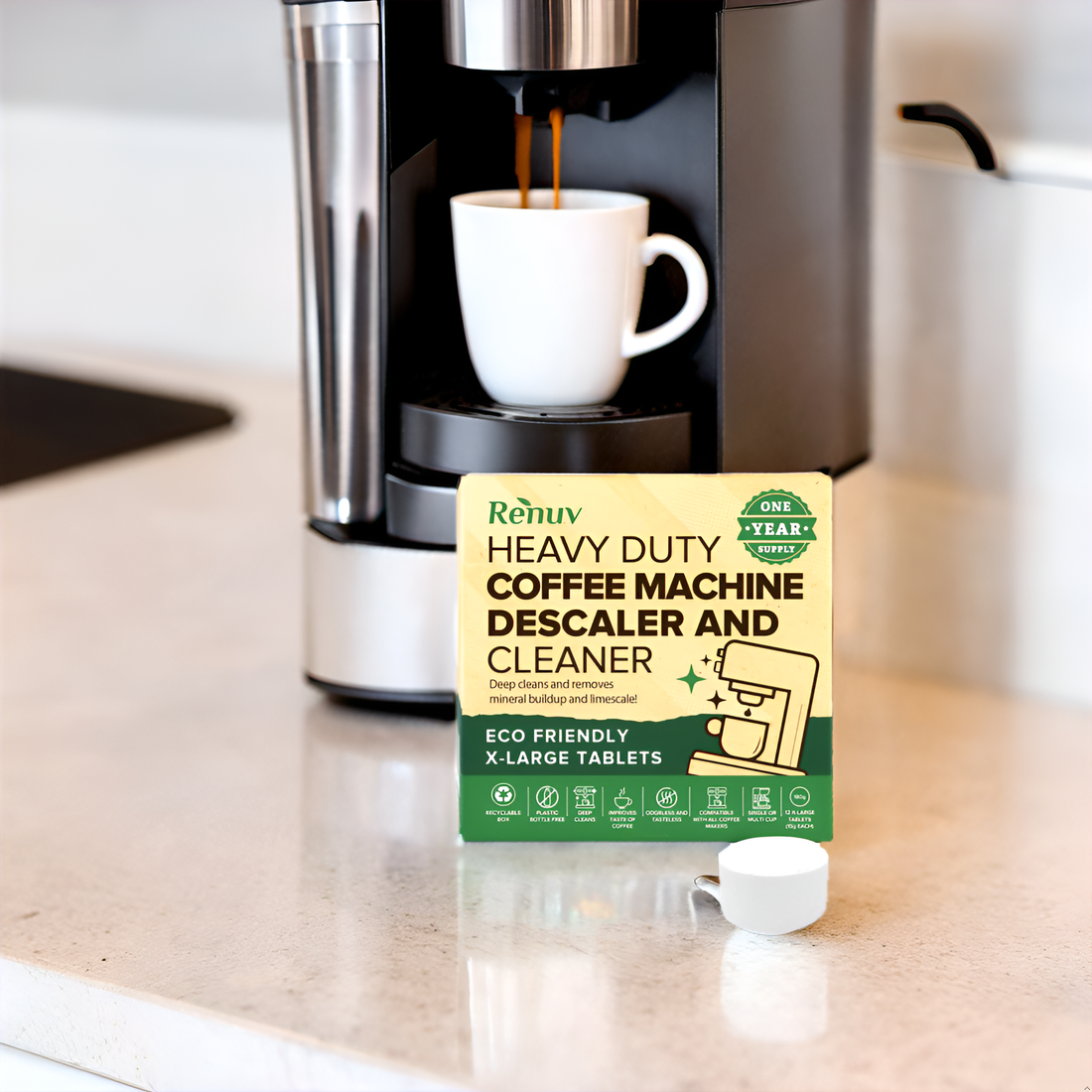
If you want an easier option than vinegar, Renuv Coffee Maker Cleaner & Descaler Tablets are made for exactly this kind of job.
Why your Keurig needs cleaning and descaling
A lot of people treat Keurigs like sealed machines that somehow stay clean on their own. They do not.
Over time, a few things build up inside:
- coffee oils
- old residue
- mineral deposits from water
- gunk around the pod area and needle
- hard water scale in the internal system
That buildup can lead to:
- slower brewing
- weaker coffee
- bad taste
- inconsistent cup size
- strange smells
- shorter machine life
Signs your Keurig needs to be cleaned
Your Keurig probably needs cleaning or descaling if:
- coffee tastes bitter, stale, or off
- the machine is brewing slower than normal
- brew size is inconsistent
- the machine seems louder than usual
- you can see residue around removable parts
- it has been more than a month since the last cleaning
- you live in a hard water area and have not descaled recently
What you’ll need
Before you start, gather:
- Renuv Coffee Maker Cleaner & Descaler Tablets
- fresh water
- a large mug
- a soft cloth or sponge
- mild dish soap
- a paperclip or Keurig needle-cleaning tool
Step 1: Turn off the machine and empty it
Unplug the Keurig and remove any pod that is still inside. Empty the water reservoir and make sure there is no leftover standing water sitting in the machine.
Starting with an empty machine makes the rest easier.
Step 2: Wash the removable parts
Take out the removable parts and wash them with warm, soapy water.
This usually includes:
- water reservoir
- lid
- drip tray
- pod holder if removable
Rinse everything well and let it dry.
Wipe down the outside of the machine too. Keurigs tend to collect coffee splashes and residue faster than people think.
Step 3: Clean the needle area
The needle area is one of the most common trouble spots.
If coffee grounds or residue get stuck there, your Keurig can brew badly or inconsistently.
Use a paperclip or cleaning tool to carefully clear out debris. Do not jam it aggressively. You just want to loosen whatever is stuck.
Step 4: Add the cleaning solution
Fill the reservoir with fresh water.
Then add one Renuv Coffee Maker Cleaner & Descaler Tablet and let it dissolve fully.
This gives you a cleaning solution that helps deal with both coffee residue and mineral buildup.
Step 5: Run the cleaning cycle
Place a large mug under the spout.
Run brew cycles without inserting a pod. Use the largest cup setting if your machine allows it.
Keep brewing until the reservoir is empty, discarding the water after each cycle.
This helps move the solution through the machine and clean internal buildup.
Step 6: Rinse the machine thoroughly
Refill the reservoir with clean water only.
Run several more brew cycles with no pod until the reservoir is empty again.
This step matters. You want to flush the machine well so there is no leftover cleaning solution inside.
Step 7: Reassemble and test
Put the removable parts back in place, refill the reservoir with fresh water, and run one more plain-water brew cycle.
If the water runs clean and the machine is brewing normally, your Keurig is ready to go.
How often should you descale a Keurig?
For most people, a monthly cleaning routine is a good baseline.
If you use your Keurig heavily or have hard water, you may need to descale it more often.
A simple rule:
- light use: about once a month
- heavy use: every few weeks
- hard water: do not wait too long between descaling cycles
Common mistakes to avoid
Waiting until the machine is clearly struggling
A lot of people only descale once the Keurig is already brewing badly. That is late.
Regular maintenance is easier than fixing a machine that is already clogged up.
Only wiping the outside
A clean-looking machine is not the same thing as a clean machine.
The real problem is usually internal buildup.
Not rinsing enough after descaling
Always flush the machine well with clean water after using a cleaner or descaler.
Ignoring hard water
If your home has hard water, your machine is dealing with more mineral buildup than you think.
Should you use vinegar to descale a Keurig?
People do it, but it is not always the cleanest or easiest option.
The downside with vinegar is:
- strong smell
- lingering taste if not rinsed well
- inconsistent strength depending on how people mix it
That is why a lot of people prefer a cleaner made specifically for coffee makers.
If you want a simpler option, Renuv Coffee Maker Cleaner & Descaler Tablets are made for this exact job.
Recommended product
If you want an easier routine, use Renuv Coffee Maker Cleaner & Descaler Tablets.
They help remove:
- coffee oils
- residue
- mineral buildup
- hard water scale
They are a cleaner fit for coffee-maker maintenance than trying to improvise every time.
You can also browse the full Appliance Cleaners collection if you are cleaning more than one machine around the house.
Related guides
- How to Clean and Descale Your Ninja Coffee Maker
- How to Clean and Descale Your Cuisinart Coffee Maker
- Citric Acid for Cleaning
FAQ
How do I know if my Keurig needs descaling?
If it is brewing slowly, tasting off, making inconsistent cup sizes, or has not been cleaned in a while, it probably needs descaling.
Can I use a Keurig without descaling it?
You can for a while, but buildup will eventually affect taste, speed, and machine performance.
How often should I clean my Keurig?
A monthly cleaning routine is a good baseline for most users. Heavy use and hard water may call for more frequent cleaning.
What is the best way to descale a Keurig?
Use a proper descaling routine with a coffee maker cleaner or descaler, then flush the machine thoroughly with clean water.
Does descaling improve coffee taste?
Yes. Removing old residue and mineral buildup can help your coffee taste cleaner and fresher.